

Each year, our team undertakes a study tour to step outside our day-to-day project work and experience places that are pushing boundaries in planning, mobility and urban design.
This year’s tour took us to the Netherlands, focusing on how different forms of car-free and car-light development have been delivered across very different contexts: from 1970s greenfield new towns to contemporary high-density urban extensions. What stood out was not just policy or design standards, but how these places feel to move through, particularly by bike.
Learning together
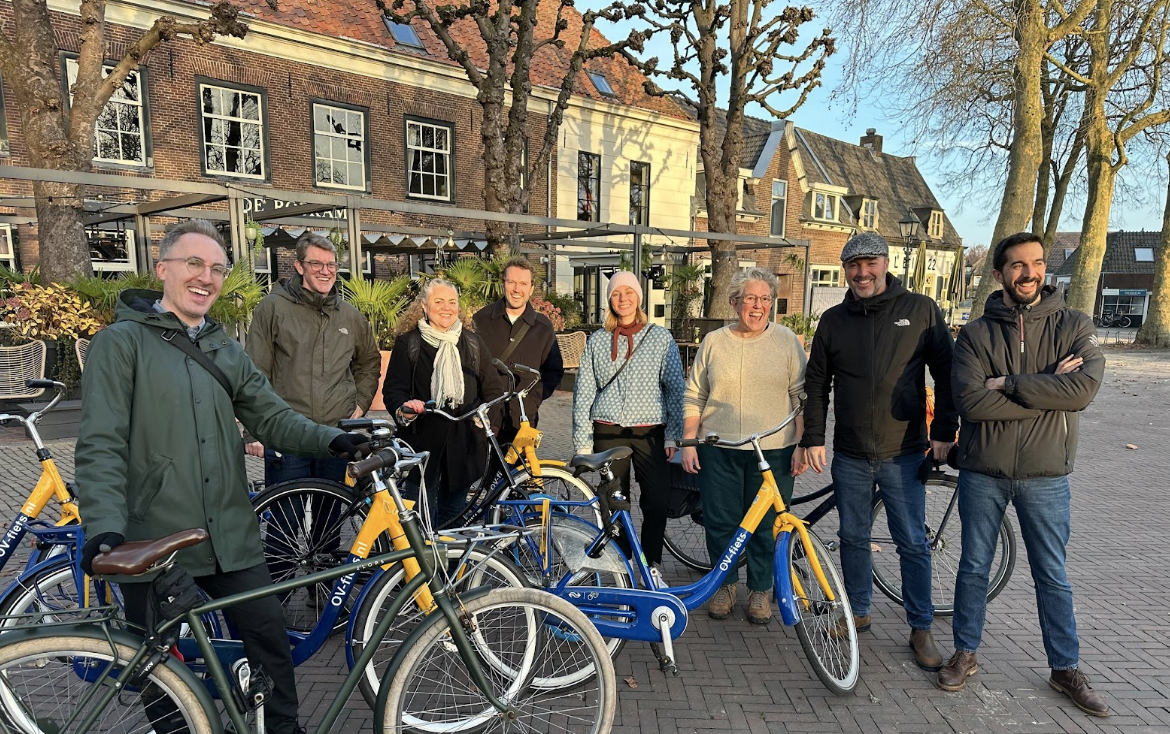
We were joined on the tour by Bas Govers (Goudappel), Daan van Doormaal (Wildverband) and Jackson Morsey (UrbaGraphics).
We value these opportunities to learn together with partners whose work we regularly draw on and contribute to. Sharing site visits, conversations and everyday experiences including moving between places by bike — helps build a shared understanding that continues to inform our projects well beyond the tour itself.
Houten: a pioneering cycling town
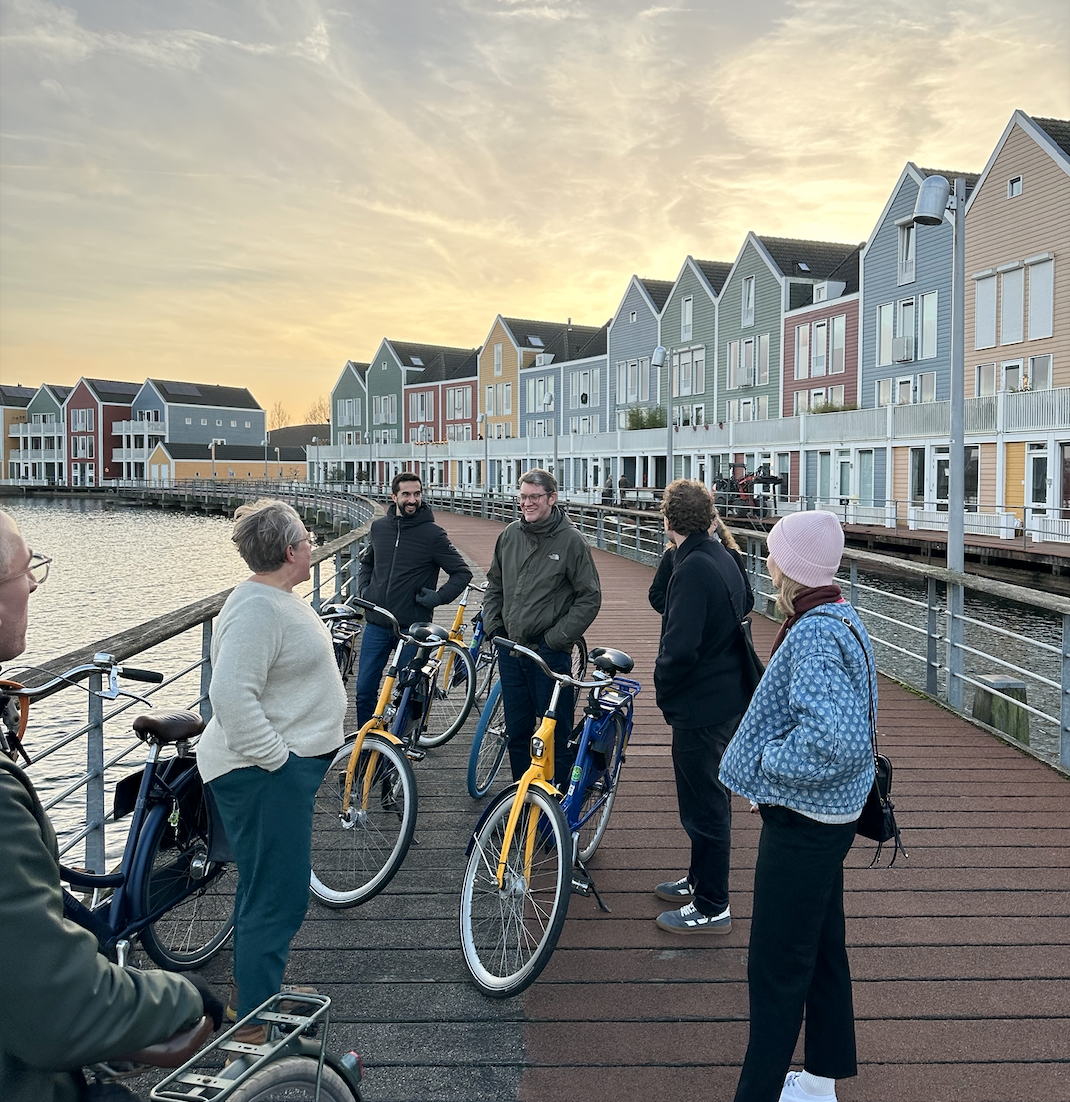
Houten is one of the Netherlands’ most well-known examples of a town planned around walking and cycling rather than the private car. Developed largely from the 1970s onwards on greenfield land, its structure separates through-traffic from local movement, with a fine-grained network of cycle routes connecting homes, schools, shops and the railway station.
Rather than treating cycling as an add-on, Houten embeds it as the default mode for everyday trips. Residential streets are calm and people-focused, while direct and legible cycle routes make longer journeys easy and intuitive.
We were guided around Houten by Kylie van Dam, who has been closely involved in documenting and explaining the town’s planning principles over many years. Kylie is currently working with the original designer of Houten on an updated edition of the book Het groen omarmd a definitive account of how the town’s spatial and mobility ideas were conceived and delivered.
This work plays an important role in ensuring that Houten’s lessons are properly understood, accurately represented, and shared with a new international audience.
Merwede, Utrecht: High density, low car use
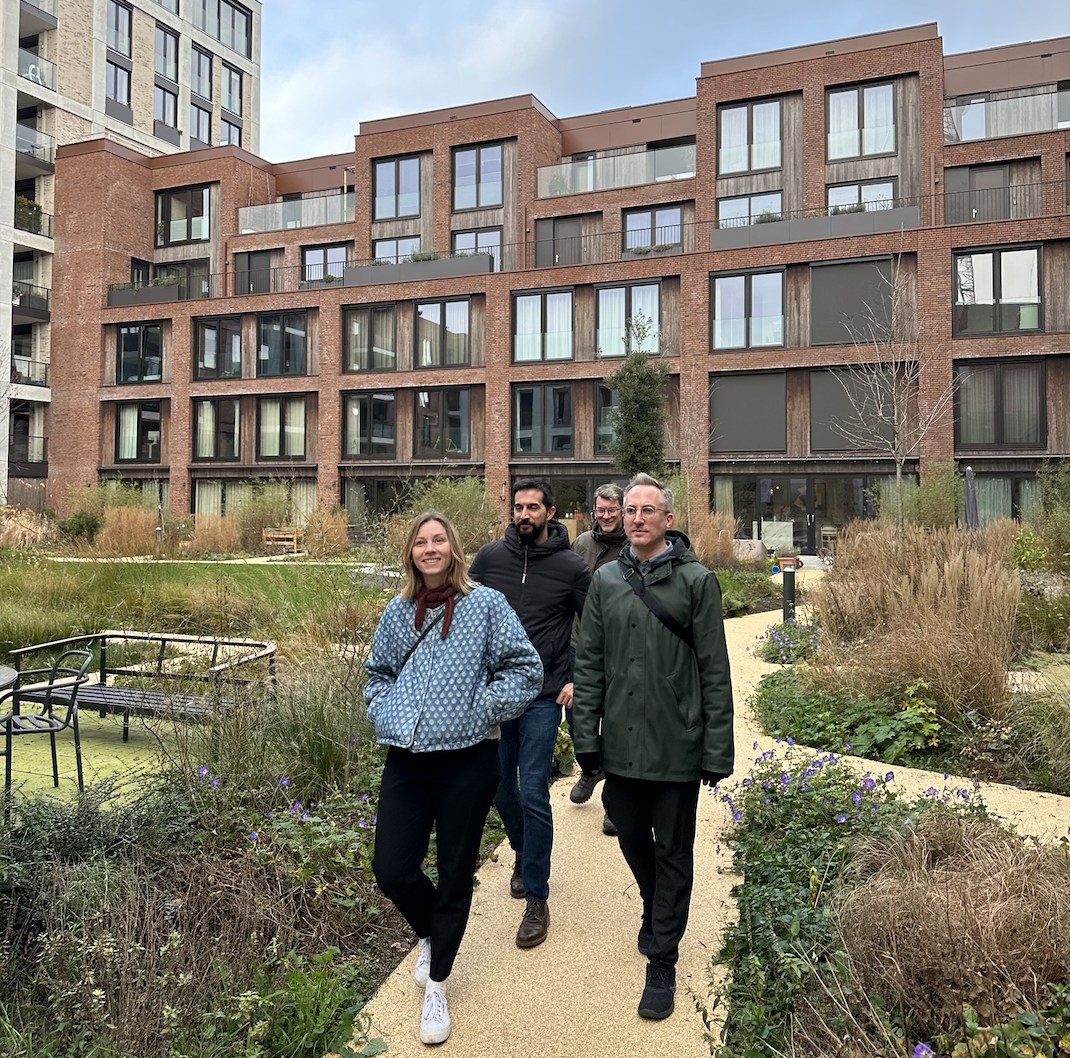
From Houten, we moved to Merwede in Utrecht — a very different proposition in terms of scale, density and context.
Merwede is a major brownfield redevelopment delivering around 6,000 new homes, planned with a maximum of 0.3 cars per dwelling. Despite this, it is not framed as a niche or experimental project, but as a mainstream urban neighbourhood designed around walking, cycling and high-quality public space.
We were joined by Bas Govers of Goudappel, who presented the thinking behind Merwede’s mobility strategy and spatial structure. What was particularly striking was how clearly transport choices are aligned with place-making objectives: streets as social spaces, clear movement hierarchies, and strong links to public transport.
Merwede shows how car-light living can be delivered at scale — not by banning cars outright, but by making other choices easier, more pleasant and more logical.
Rotterdam: context and contrast
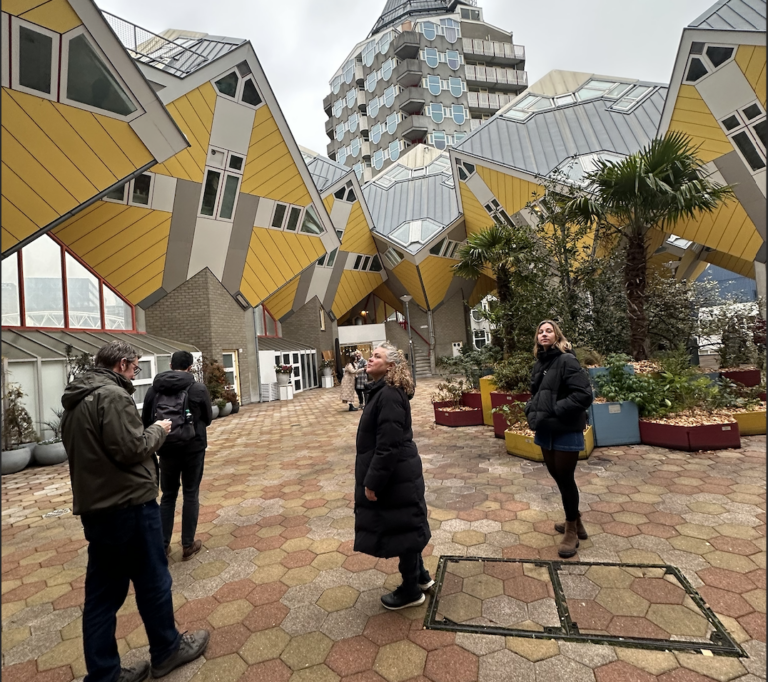
Our time in Rotterdam provided a broader urban contrast, reminding us that Dutch planning is not uniform or static. Iconic projects such as the Cube Houses sit alongside contemporary debates about density, liveability and movement in a major city.
Seeing these places together reinforced an important point: successful low-car development is not about copying a single model, but about responding intelligently to context while keeping clear priorities.
The lived experience: cycling at rush hour
While presentations and site visits were valuable, the moment most people mentioned afterwards was not a diagram or statistic.
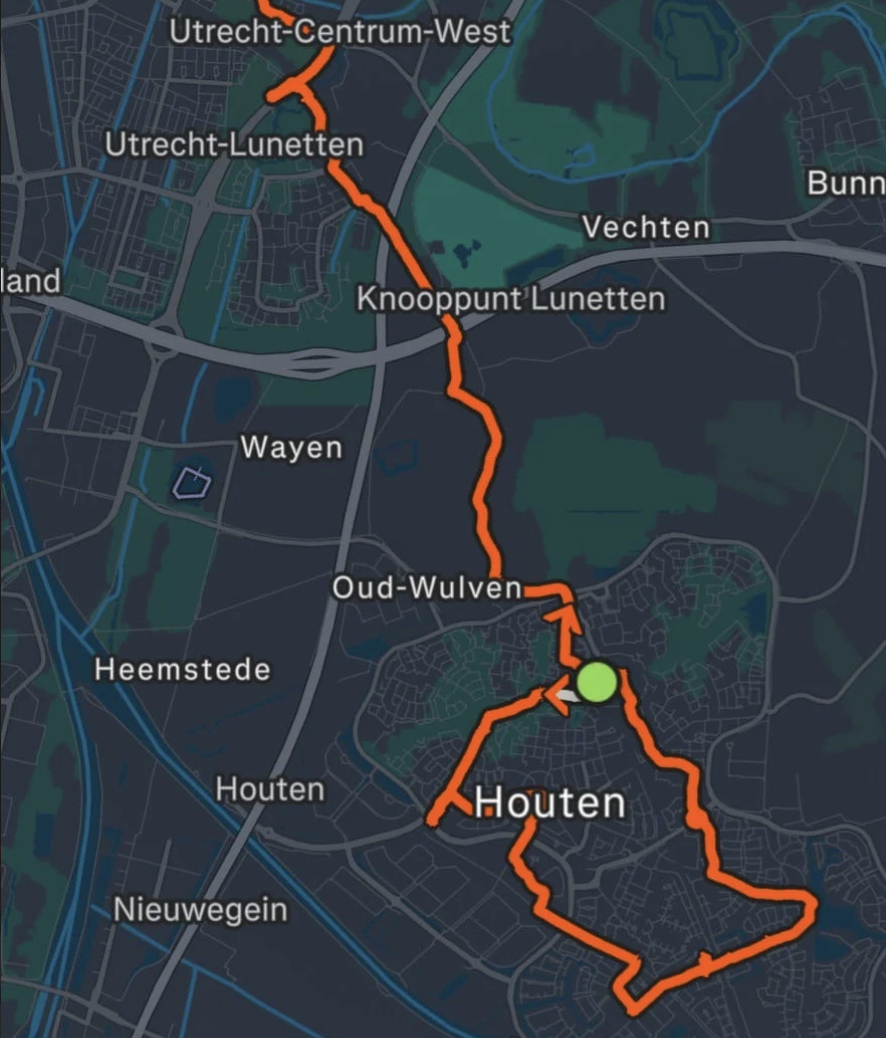
It was cycling between Houten and Utrecht at night, during rush hour.
Despite heavy car traffic on nearby roads, the cycle journey was calm, direct and stress-free. Routes were legible, junctions intuitive, and priority clear. It was a powerful reminder that good mobility planning is ultimately measured in how it feels to use especially at busy times, in ordinary conditions.
That experience captured what the tour was really about: places where walking and cycling are not symbolic gestures, but genuinely viable, everyday choices.
Reflections
Taken together, Houten and Merwede illustrate that prioritising walking and cycling is not limited to a single era, density or site type. From a 1970s new town to a contemporary urban extension, the common thread is clarity of intent, backed by consistent design and long-term thinking.
These lessons continue to inform our work across the UK and Europe, particularly as towns and cities grapple with growth, climate commitments and the need to create places that are healthier and more resilient.
Supporting Kylie’s work
Kylie van Dam is currently raising funds to support the update of Het groen omarmd, working alongside Houten’s original designer to bring the story of the town’s planning and cycling-led approach up to date.
👉 Find out more and support the project here